
















The Vampire Squid’s Glowing Escape
· 2:58 · With Emma
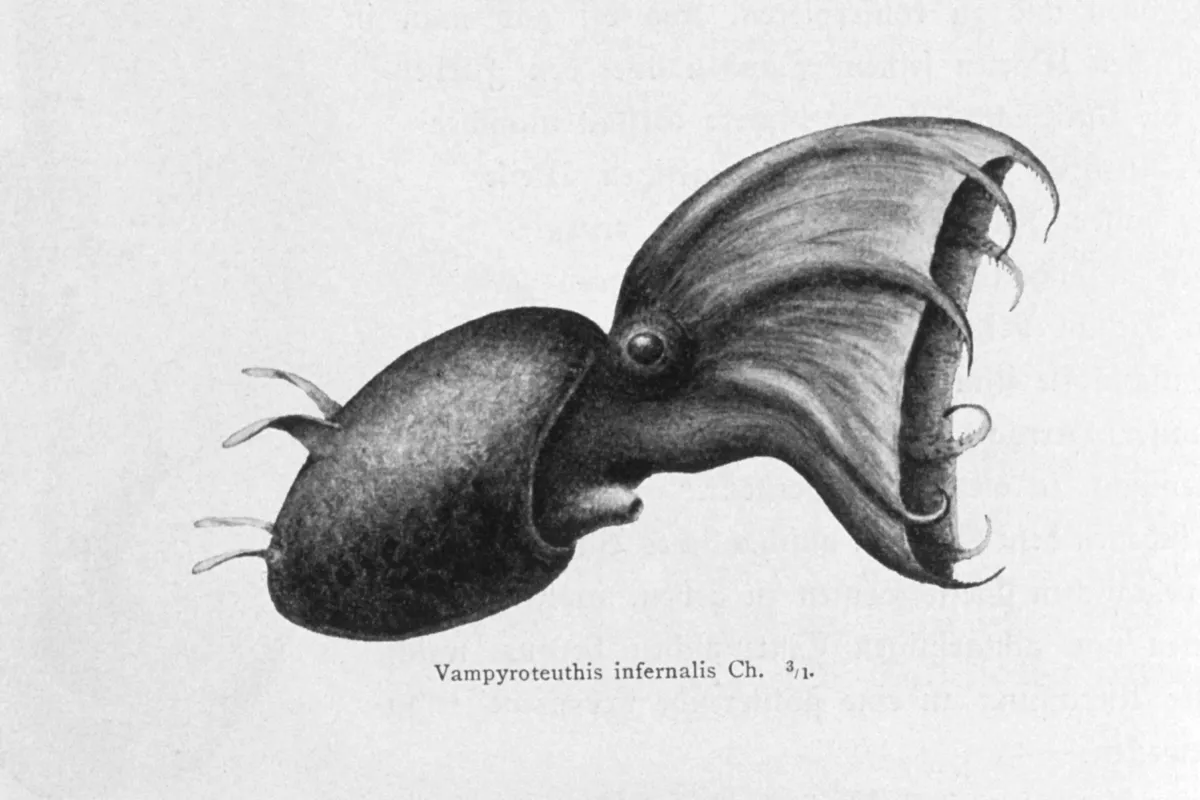
Today, meet an animal with a misleading name and a remarkable way to glow: the vampire squid. Despite its name, the vampire squid is more closely related to octopuses than to…
Transcript
EmmaYou’re listening to Daily Random Facts on Slow English FM, where we make surprising ideas clear and enjoyable. Today, meet an animal with a misleading name and a remarkable way to glow: the vampire squid.
EmmaDespite its name, the vampire squid is more closely related to octopuses than to true squids. It has eight arms and two long, thread-like filaments. Those filaments help it collect food rather than catch live prey.
EmmaMuch of that food is marine snow. The name sounds like frozen weather, but it means tiny particles of organic material drifting down through the ocean. In observations and feeding experiments, researchers saw the squid extend a filament to collect particles. It then drew the filament between its arms and wrapped the food in mucus as it moved it toward its mouth.
EmmaThe squid’s light organs are arranged in several places. Tiny organs called photophores cover its skin, and each arm ends in several simple light organs. A more complex pair sits near the fins. These organs produce bioluminescence: light made through a chemical reaction in a living organism.
EmmaWhen startled, the vampire squid can release clouds of glowing mucus from the light organs at the tips of its arms. Smithsonian says scientists think this display may help defend the animal. The squid does not squirt ordinary ink. NOAA describes its mucus as sticky and bioluminescent, and notes that the squid lives in deep water where little light penetrates.
EmmaThat deep-water home brings another challenge: low oxygen. Vampire squid are often found in the ocean’s oxygen-minimum zone, a region where oxygen levels are especially low. Monterey Bay Aquarium describes several features that help them conserve energy there, including a slow metabolism and near-neutral buoyancy. That means they can remain suspended in the water without spending much energy swimming up or down. The aquarium also describes large gills and blood that carries oxygen.
EmmaSo the vampire squid’s glow is more than a strange spectacle. It is part of a set of adaptations for life in a dark, low-oxygen environment—alongside a way of gathering drifting food without chasing fast prey. I’m your host on Slow English FM. Thanks for joining Daily Random Facts; we’ll keep making the surprising details of our world easier to follow.
Vocabulary in this episode
- misleading name
Today, meet an animal with a misleading name and a remarkable way to glow: the vampire squid.
The name gives the wrong idea about what the animal is.
- filament
In observations and feeding experiments, researchers saw the squid extend a filament to collect particles.
Here, a filament is a thin part the squid stretches out to gather food.
- filament
It then drew the filament between its arms and wrapped the food in mucus as it moved it toward its mouth.
The filament is a thin part that carries food toward the squid’s mouth.
- marine snow
Much of that food is marine snow.
Marine snow is tiny bits of material that drift down through the sea.
- organic material
The name sounds like frozen weather, but it means tiny particles of organic material drifting down through the ocean.
Material from plants or animals; here, it is in tiny pieces drifting through the sea.
- mucus
It then drew the filament between its arms and wrapped the food in mucus as it moved it toward its mouth.
Mucus is a thick, slippery substance that covers the food.
- mucus
When startled, the vampire squid can release clouds of glowing mucus from the light organs at the tips of its arms.
Here, mucus is a glowing, slippery substance the squid releases.
- mucus
NOAA describes its mucus as sticky and bioluminescent, and notes that the squid lives in deep water where little light penetrates.
Here, mucus means the sticky, light-producing substance from the squid.
- bioluminescence
These organs produce bioluminescence: light made through a chemical reaction in a living organism.
Bioluminescence is light made by a living thing through a chemical process.
- startled
When startled, the vampire squid can release clouds of glowing mucus from the light organs at the tips of its arms.
When startled means when something suddenly frightens or surprises it.
- penetrates
NOAA describes its mucus as sticky and bioluminescent, and notes that the squid lives in deep water where little light penetrates.
Here, light penetrates means light reaches or enters the deep water.
- oxygen-minimum zone
Vampire squid are often found in the ocean’s oxygen-minimum zone, a region where oxygen levels are especially low.
This is an ocean region where the amount of oxygen is very low.
- conserve energy
Monterey Bay Aquarium describes several features that help them conserve energy there, including a slow metabolism and near-neutral buoyancy.
Conserve energy means use less energy.
- near-neutral buoyancy
Monterey Bay Aquarium describes several features that help them conserve energy there, including a slow metabolism and near-neutral buoyancy.
It means the squid neither sinks nor rises much in the water.
- adaptations
It is part of a set of adaptations for life in a dark, low-oxygen environment—alongside a way of gathering drifting food without chasing fast prey.
Adaptations are features that help an animal live in its surroundings.