















Following the Andean Roads
· 9:23 · With Riko and Tova
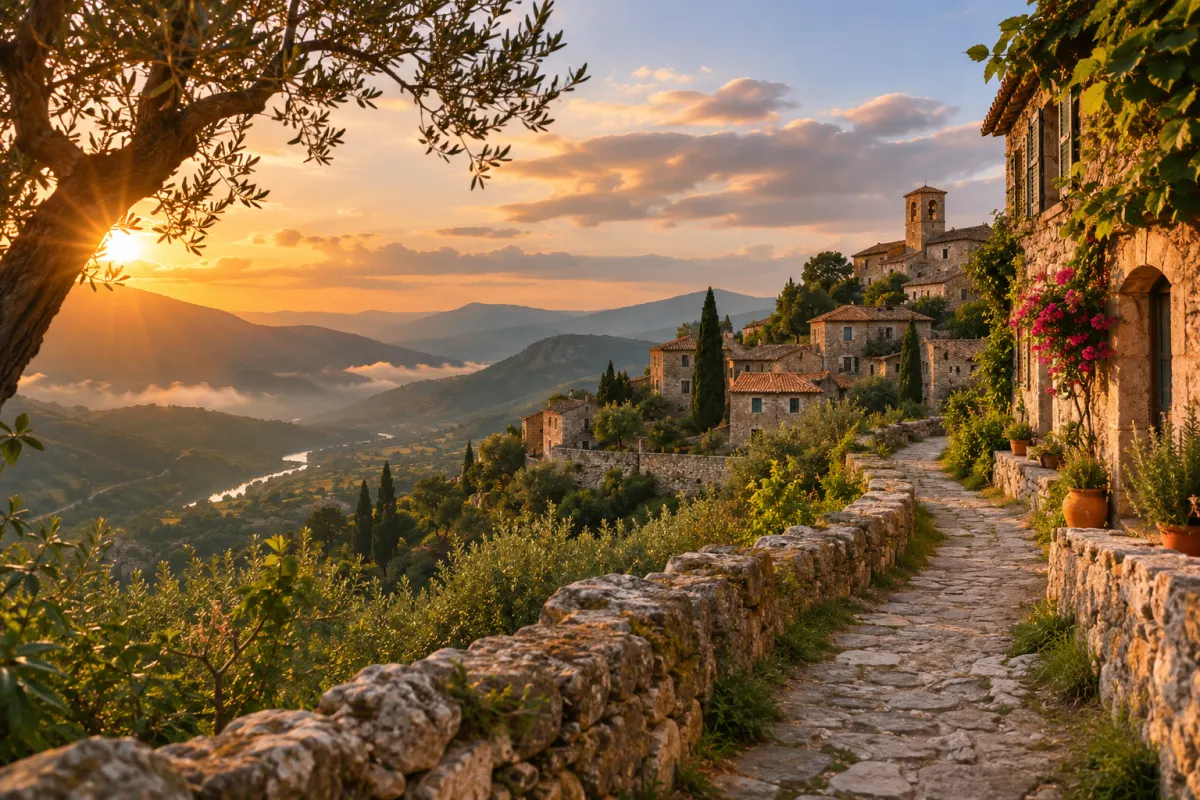
On a mountain path, the next few metres can hold all your attention. A slope rises beside you. The ground falls away on the other side. The path follows the shape of the land.
Transcript
Vocabulary in this episode
- slope
A slope rises beside you.
Ground that rises or falls instead of staying flat.
- slope
A steep slope.
Ground that rises or falls instead of staying flat.
- slope
Instead of placing a foot on a continuous slope, a walker moves from one surface to the next.
Ground that rises or falls instead of staying flat.
- slope
Rain can run down a slope, gather in a hollow and carry loose earth away.
Ground that rises or falls instead of staying flat.
- ridge
Roads reached beyond the next ridge, into valleys, towards settlements, across rivers.
The long, high line along the top of a mountain.
- terrain
Earlier Andean communities had already built routes and developed knowledge of the terrain.
The shape and physical features of the ground.
- terrain
On the ground, every connection has to pass through real terrain.
The shape and physical features of the ground.
- provisions
They held provisions, too.
Food and other supplies kept ready for a journey.
- storehouses
Inca storehouses, called colcas, could be round or rectangular.
Buildings used to keep food or other supplies safe.
- fibres
Its structure is made from plant fibres, twisted and woven into ropes.
Thin threads of plant material used here to make rope.
- fibres
Families prepare the fibres and make ropes.
Thin threads of plant material used here to make rope.
- fibres
The transformation is gradual: fibres become cords; cords become cables; the cables become a bridge.
Thin threads of plant material used here to make rope.
- fibres
He also described fibres being beaten with a stone and soaked to make them easier to work.
Thin threads of plant material used here to make rope.
- fibres
Before there is a place to put a foot above the river, there are hands preparing the fibres.
Thin threads of plant material used here to make rope.
- cords
Smaller cords are combined into much thicker cables.
Thin ropes made by combining and twisting fibres.
- cords
The transformation is gradual: fibres become cords; cords become cables; the cables become a bridge.
Thin ropes made by combining and twisting fibres.
- cords
How do several cords come together?
Thin ropes made by combining and twisting fibres.
- cables
A suspension bridge carries its walkway on cables held at either end.
Very thick, strong ropes supporting the bridge.
- cables
The cables span the space between the banks.
Very thick, strong ropes supporting the bridge.
- cables
Smaller cords are combined into much thicker cables.
Very thick, strong ropes supporting the bridge.
- cables
The transformation is gradual: fibres become cords; cords become cables; the cables become a bridge.
Very thick, strong ropes supporting the bridge.
- gorge
Q’eswachaka stretches across a gorge of the Apurímac River.
A deep, narrow valley with steep sides.
- gorge
The work moves from something a person can hold in their hands towards a structure that reaches across the gorge.
A deep, narrow valley with steep sides.
- twisted
Its structure is made from plant fibres, twisted and woven into ropes.
Turned together to make a stronger cord or rope.
- twisted
Grass was cut and twisted into cord.
Turned together to make a stronger cord or rope.
- twisted
How tightly should a fibre be twisted?
Turned together to make a stronger cord or rope.
- lodgings
Temporary lodgings called tampu housed people travelling in the service of the Inca state, including soldiers and workers.
Places where travellers can stay for a short time.
- paved
Elsewhere, walls, paved surfaces and channels helped shape a route through the land.
Covered with a hard, fairly flat surface such as stone.
- paved
Near Cusco, the Inca capital, many roads were wide and paved with stone.
Covered with a hard, fairly flat surface such as stone.
All World Discovery episodes
Sources
- UNESCO, Qhapaq Ñan, Andean Road System
- UNESCO, document WHC-04/28.COM/INF.13D
- UNESCO, patrimoine immatériel, dossier 00594
- UNESCO, reportage de Jordi Busqué
- Adaptation au milieu
- Stockage
- Hébergement
- Franchissement
- Entretien
- Audio credit: Paths Through Stone — original instrumental
- Audio credit: Narration Riko; introduction Tova
- Audio credit: CC0 sound recording A1
- Audio credit: CC0 sound recording A2
- Audio credit: CC0 sound recording A3
- Audio credit: CC0 sound recording A4